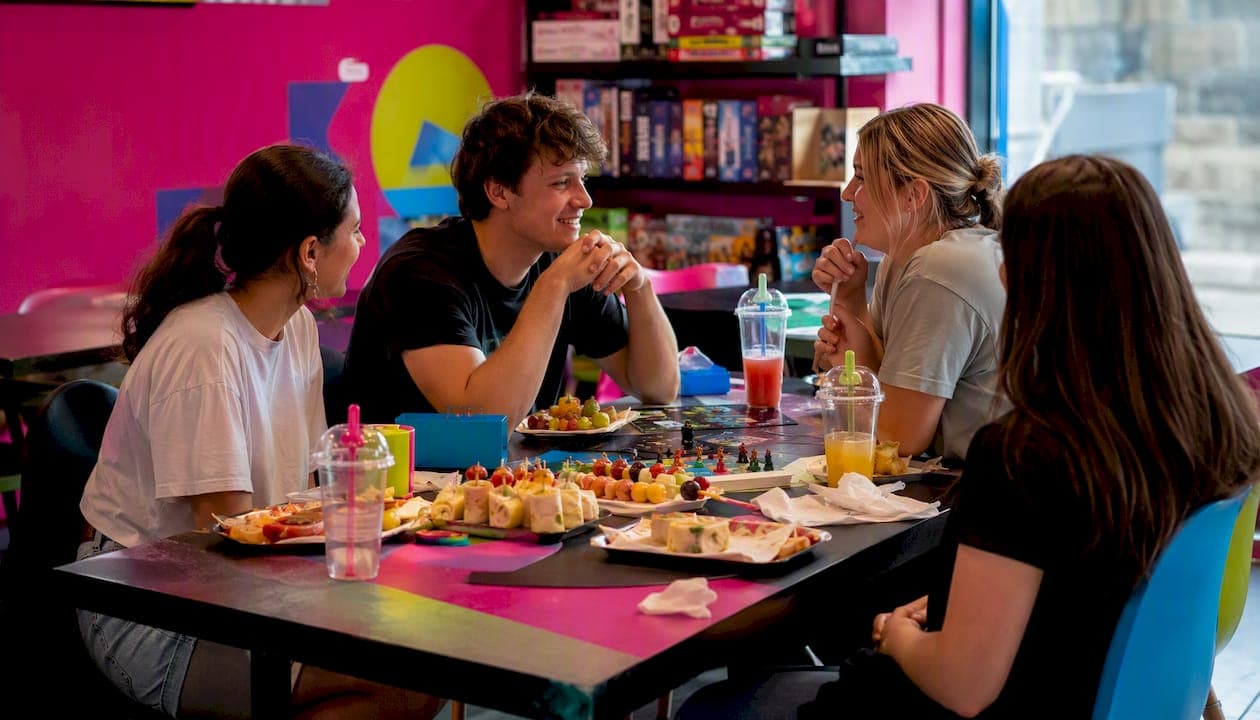
The best board game café food is dry, one-handed, and residue-free. That single rule shapes every great café menu, and it is not arbitrary. Whole-grain-forward menus with careful portion control are linked to longer play sessions, sharper player focus, and fewer mid-session energy crashes. Get the food right, and your group stays at the table longer, plays better, and leaves happier.
The core characteristics of game-friendly food:
- Low-mess: no grease, no sticky sauces, no crumbs that migrate into card sleeves
- One-handed: players can grab and eat without putting down their hand of cards
- Portion-controlled: individual servings stop the communal bowl from becoming a distraction
- Session-matched: lighter snacks for two-hour games, small meals for four-hour campaigns
Key takeaways
Game-friendly food is dry, one-handed, and residue-free: that principle, applied consistently, is what separates a great board game café session from one that ends early because someone knocked a drink over a board.
| Point | Details |
|---|---|
| Golden food rule | Choose dry, one-handed, residue-free snacks to protect components and keep play flowing. |
| Session-matched portions | Two-hour sessions suit snack bundles; four-hour sessions need a small meal at the halfway point. |
| Table setup matters | Use a side table for food, lidded cups for drinks, and open all packaging before play begins. |
| Allergen planning | Ask about allergen labelling and individual portions before you book, especially for mixed groups. |
| Lvls Newcastle | Offers a board game café with 80+ games, individual-portion snack service, and bookable group packages. |
Table of Contents
- What to expect at a board game café
- Best board game café food: snacks and small meals that actually work
- Serving practices and table setup to protect games
- Beverage options and alcohol at a board game café
- Managing dietary requirements and allergens
- Common board games in cafés and the foods that suit them
- How cafés should design a session-friendly menu
- How to choose a board game café for your group's food needs
- Lvls Newcastle: food-friendly gaming under one roof
- Sources
What to expect at a board game café
Most board game cafés run on one of two service models: full table service where staff bring food to you, or counter-order where you collect your own. A third model, increasingly popular, is the pre-ordered snack bundle, delivered once at the start of your session so play is never interrupted by a second round of ordering.
Many venues charge a per-person library fee on top of food and drink spend. This covers game maintenance, replacements, and staff who can explain rules. Some cafés waive the fee on promotional nights when you hit a minimum food or drink spend, which is worth checking before you book.
House rules around food are non-negotiable at most venues. The standard set: no food on the game board, snacks on a side table only, drinks in covered cups or with coasters, and packaging opened before play begins. These rules exist because a single greasy fingerprint on a Catan resource card or a spilled coffee on a Ticket to Ride board can write off a £40 game.
Pro Tip: Ask the venue whether they provide side tables or snack trays when you book. If they do not, bring a small foldable tray. Keeping food physically separate from the play surface is the single most effective thing you can do to protect components.
Best board game café food: snacks and small meals that actually work
Dry, bite-sized, and residue-free is the shortlist. Snack sticks, jerky, pretzels, and roasted nuts are the classics for a reason: they are easy to grab one-handed, they do not leave grease on fingers, and they share well from a small bowl.
What works well:
- Whole-grain flatbreads with hummus (pre-portioned, dip on the side)
- Mini grain bowls with roasted vegetables (fork-friendly, low-crumb)
- Popcorn with seasoning baked in so it does not dust the table
- Cheese cubes and grapes served with toothpicks
- Roasted chickpeas, mixed nuts, and pretzel bites in individual cups
- Protein-forward options: jerky strips, hard-boiled eggs, edamame
Oily, sticky, or crumb-heavy foods are the ones to avoid. Crisps shed crumbs into tile gaps. Chicken wings leave residue on every card you touch. Anything with a dipping sauce that requires two hands is a liability the moment someone draws a new hand of cards.
For a two-hour session, a snack bundle with a small number of items per person is plenty. For a four-hour session, a small meal, such as a grain bowl or a flatbread wrap, served at the halfway point keeps energy steady without the sugar crash that follows a plate of biscuits.
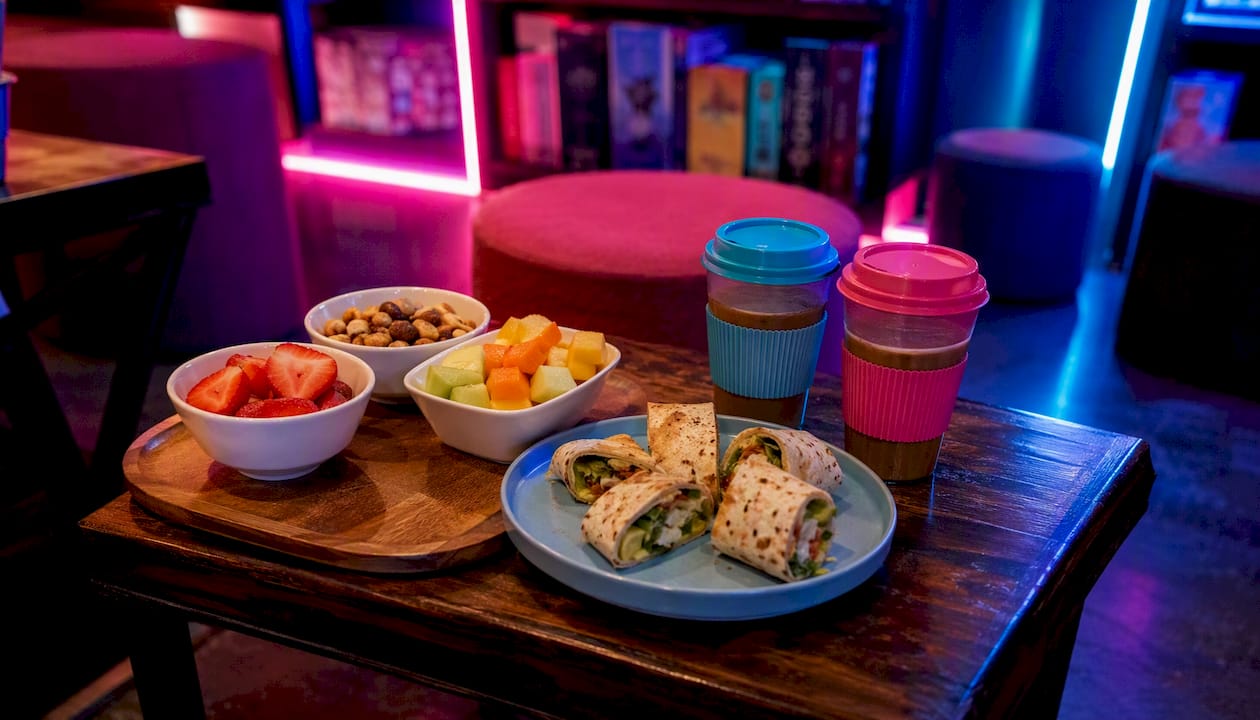
Pro Tip: Pre-portion everything before play starts. Open packets, divide nuts into individual cups, and cut flatbreads into bite-sized pieces. The fewer interruptions to gameplay, the better the session.
Serving practices and table setup to protect games
Good intentions fall apart without a clear setup. Follow this sequence before the first card is dealt:
- Set up a dedicated snack surface. A side table, a tray, or even a cleared corner of the main table works. Food never touches the play area.
- Use covered cups for all drinks. A lidded travel cup or a cup with a straw reduces spill risk dramatically. Coasters under every glass, always.
- Serve in small individual portions. Small bowls or pre-portioned cups mean players are not reaching across the board to a shared plate.
- Open all packaging before play begins. Rustling wrappers mid-game break concentration and scatter crumbs.
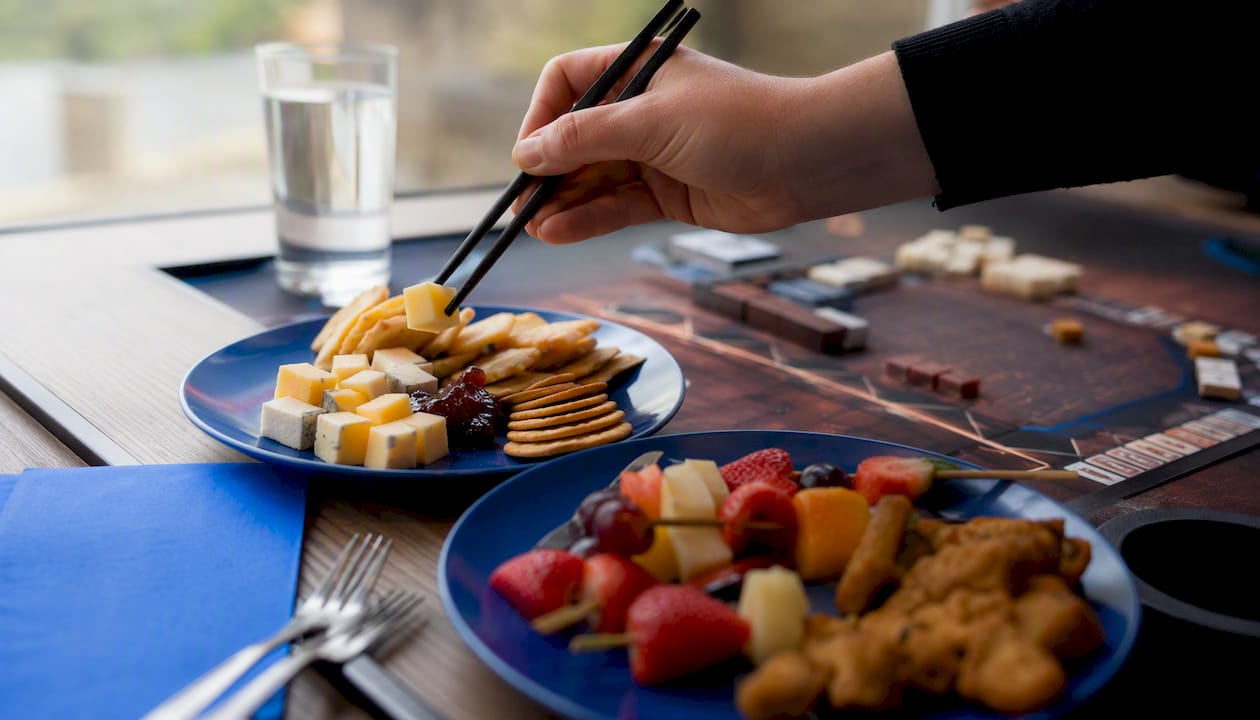
- Place utensils with every food item. Toothpicks, small forks, or finger chopsticks let players eat cheese, fruit, or anything slightly sticky without transferring residue to components.
- Schedule a clearing round at the session midpoint. Staff or players clear empty cups and wrappers so the table does not accumulate clutter.
For venue operators, allergen labelling on every item is non-negotiable. A small card next to each snack bowl listing the top 14 allergens takes seconds to prepare and prevents serious incidents. Cleaning between sessions should include wiping down all snack surfaces and checking game boxes for crumbs.
Pro Tip: Using finger chopsticks or small forks expands the range of foods a café can safely serve. Cheese, fruit skewers, and even small chicken bites become low-risk when fingers never touch the food directly.
Beverage options and alcohol at a board game café
A well-run café offers a full beverage range: barista coffee, teas, soft drinks, craft beer, cocktails, and non-alcoholic alternatives. The key is not what is on the menu but how it is served.
- Lidded cups for hot drinks: a spill-proof lid on a flat white is standard practice at most game cafés
- Coasters under every glass: non-negotiable, even for water
- Designated drink zones: drinks stay at the edge of the table, never on the play surface
- Alcohol policy awareness: some venues limit spirits or high-ABV drinks during family sessions or competitive nights; check when booking if this matters to your group
Alcohol affects session dynamics in ways that are easy to underestimate. A second round of cocktails mid-game slows decision-making and raises the chance of a knocked-over glass. Many cafés handle this by offering lower-ABV options, such as craft lagers and wine by the glass, as the default, with spirits available on request. For family bookings or younger groups, a dedicated non-alcoholic menu with interesting options, such as house-made lemonades or botanical sodas, keeps everyone engaged without the spill risk that comes with a full cocktail service.
Managing dietary requirements and allergens
A board game café serves groups, and groups always contain someone with a dietary need. The practical steps:
- Label every menu item clearly with allergen information, using the standard 14 allergen categories
- Offer individually wrapped or pre-portioned options so cross-contact between shared bowls is minimised
- Train staff to answer allergen questions confidently and to flag items that share preparation surfaces
- Include naturally inclusive options: vegan whole-grain flatbreads, gluten-free roasted nuts, and dairy-free dips cover the most common requirements without a separate menu
For players, the etiquette is simple. Announce any allergy when you arrive, not after the food is on the table. Avoid sharing utensils from communal bowls if someone at the table has a contact allergy. Ask staff directly if you are unsure about an ingredient. Family groups booking with children should check the family-friendly game and menu options in advance to avoid surprises on the day.
Common board games in cafés and the foods that suit them
Different games demand different levels of attention and hand use. Matching food to the game is a small detail that makes a real difference.
| Game | Complexity / handling | Best food style |
|---|---|---|
| Catan | Medium; frequent card and tile handling | Roasted nuts, pretzel bites in individual cups |
| Ticket to Ride | Low to medium; train cards and route tiles | Grain bowls, flatbread pieces, one-handed snacks |
| Carcassonne | Low; tile-laying, minimal hand use | Any low-mess snack; shareable side plates work well |
| Azul | Medium; frequent tile-picking | Dry snacks only; no grease near the pattern tiles |
| Sushi Go! | Fast; rapid card-passing | Quick-to-eat bites only; nothing that requires two hands |
A few pairing principles worth keeping in mind:
- Fast-turn games like Sushi Go! need quick-to-eat, one-handed snacks. A grain bowl is wrong for a game where cards pass every thirty seconds.
- Relaxed social games like Carcassonne suit shareable low-mess plates because players have time between turns to eat properly.
- Component-intensive games like Azul demand the strictest food discipline. Tile-picking with greasy fingers is how expensive game sets get ruined.
For group event planning, the party board games guide covers which titles work best for larger groups and higher-energy sessions.
Food-themed board games to try at the café
If the menu itself is the theme, these titles pair naturally with a café setting:
- Sushi Go! Already a café staple; the card-passing mechanic mirrors a conveyor belt, and the food art makes it an easy sell alongside a Japanese-inspired snack menu.
- Taco Cat Goat Cheese Pizza Fast, loud, and perfect for groups who want something silly between meals.
- Wingspan Not strictly food-themed, but the egg-collecting mechanic pairs well with a brunch menu and a relaxed weekend session.
- Bohnanza A bean-trading card game that works brilliantly alongside a hummus and flatbread spread.
A café can tie a small menu item to a game night without adding mess risk: a themed snack cup labelled to match the game, or a small discount on a relevant menu item when a specific title is checked out.
How cafés should design a session-friendly menu
Menu design is an operational decision with a direct effect on revenue. Evidence from 2026 café operations guidance points to whole-grain focus, portion control, and low-mess items as the three pillars of a menu that keeps players at the table longer.
Practical design principles:
- Build around batchable items: grain bowls, flatbreads, and roasted snacks can be prepared in volume and portioned quickly
- Offer two session bundles: a two-hour snack pack (three to four items per person) and a four-hour pack that adds a small meal
- Write menu microcopy that communicates game-friendliness: "served in individual portions," "no utensils needed," "low-crumb"
- Keep equipment simple; a portable air fryer handles roasted chickpeas, flatbread crisps, and warm nuts without a full kitchen
- Rotate seasonal items to keep regulars interested without overhauling the whole menu
Pro Tip: Sustainability and portion control go together. Pre-portioned snack cups reduce food waste because players take what they need rather than grazing from a shared bowl that gets thrown away half-full.
For large group bookings, the large group board games guide covers service models and snack logistics that scale without chaos.
How to choose a board game café for your group's food needs
Not every café is set up equally for food. Before you book, work through this checklist:
- Ask about kitchen capacity. Can they serve hot food, or is it snacks only? Does the menu change for evening sessions?
- Check allergen handling. Do they label items? Can they accommodate a nut allergy or a vegan in your group?
- Confirm portion sizes. Are snacks served individually or from shared bowls? Individual portions are safer for groups with allergies.
- Ask whether food is kept off the play surface. A venue with side tables or snack trays built into the session is a good sign.
- Match session length to menu type. A two-hour session suits a snack bundle; a four-hour session needs a small meal option.
- Read the menu descriptions carefully. Phrases like "individually portioned," "low-mess," and "served with utensils" signal that the venue has thought about game-friendly service.
- Check the library size. A large library, 80 games or more, suggests a venue that takes the gaming experience seriously, which usually extends to how they handle food service too.
For team events, the team icebreaker games guide covers food logistics and group booking considerations worth reading before you confirm numbers.
Why the food matters as much as the games (an Lvls Newcastle perspective)
Most groups walk into a board game café thinking about which game to play. The food is an afterthought. After running a multi-activity venue with a board game café and a library of over 80 games, the pattern is clear: the sessions that run longest and generate the best feedback are the ones where the food was sorted before the first tile was placed.
It is not about offering a gourmet menu. It is about removing friction. A greasy finger on a card, a spilled drink on a board, a wrapper rustling at the wrong moment: each one pulls attention away from the game and chips away at the experience. When snacks are pre-portioned, drinks are lidded, and the table is set up correctly, players forget about the food entirely, which is exactly the point.
Lvls Newcastle holds a perfect Google rating, and the multi-activity format, combining escape rooms, axe throwing, interactive darts, and the board game café, means the team has learned what works across very different group types. The food and service approach at the café reflects that: individual portions, covered drinks, and snacks that stay off the play surface are standard, not optional extras.
Lvls Newcastle: food-friendly gaming under one roof
Lvls Newcastle brings escape rooms, axe throwing, interactive darts, and a board game café together in one venue, with a library of over 80 games and a café set up specifically for group sessions. The snack and drink service is designed around the games, not around a standard café model, which means individual portions, covered cups, and a menu that keeps play moving.
Groups booking for birthdays, team nights, or society evenings can choose from customisable session packages that combine activities and food. The LVLS Society nights are a strong option for regular group bookings, with recurring slots that include café access. For a one-off group visit, Lvls to check availability and package options.
Sources
- Why Whole Grains Matter: Board Game Café Snack Menus
- Best Snacks for Board Game Night: Easy, Mess-Free Ideas for Gamers – Mythical Meats