
Steel-tip darts weighing between 22g and 24g are the best starting point for beginners, offering the control and stability needed to build a consistent throwing technique. Darts, formally known as the sport of "arrows" in competitive circles, rewards patience and repetition far more than raw power. Whether you fancy a casual game at your local pub in Newcastle or you want to sharpen your skills at a proper venue, getting the basics right from day one makes all the difference. This guide covers dart types, weight selection, common mistakes, practice routines, and the best beginner games to get your posse throwing like pros.
1. What are the best types of darts for beginners?
Steel-tip darts on a bristle board are the standard choice for new players. They replicate the experience used in professional play, which means the skills you build transfer directly to pub games and competitive formats.
The two main materials you will encounter are tungsten and brass. Tungsten darts at 80–90% purity offer slimmer barrel profiles, which helps your darts group tighter on the board without crowding each other out. That slim profile is a genuine advantage when you start hitting consistent areas. Beginner tungsten sets typically cost around £20–£30, making them accessible without breaking the bank.
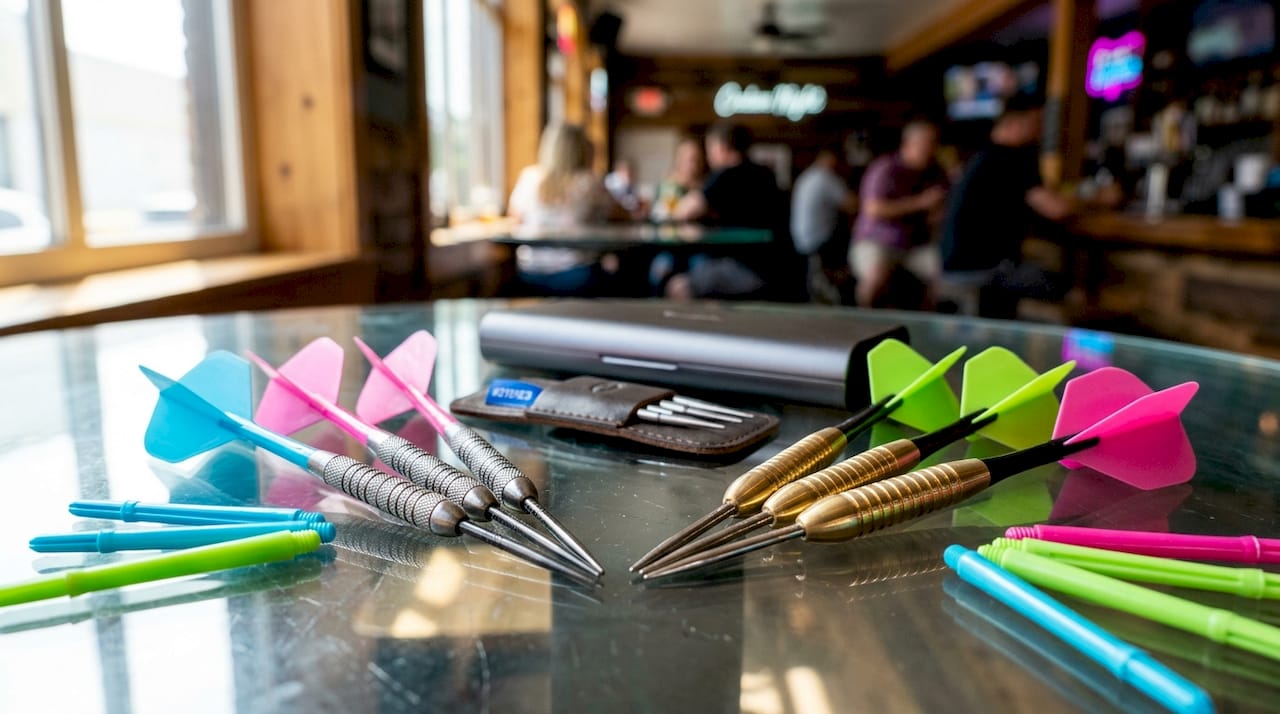
Brass darts sit under £15 and work fine for absolute beginners. The trade-off is a thicker barrel, which limits tight grouping as your accuracy improves. Switching to tungsten becomes worthwhile once you start hitting the same treble consistently.
Soft-tip darts are designed for electronic boards and use plastic tips rather than steel points. They are safe and fun, particularly in social venues. Lvls in Newcastle uses soft-tipped darts in its V-Darts system, which adds a safe but competitive edge to group sessions.
- Steel-tip darts: Best for bristle boards and realistic practice
- Tungsten barrels (80–90%): Slim, durable, and worth the modest extra cost
- Brass darts: Budget-friendly for absolute beginners, but upgrade when ready
- Soft-tip darts: Ideal for electronic boards and social venues like Lvls
Pro Tip: Start with a mid-range tungsten set around £20–£25. You will not outgrow it quickly, and the slim barrel will teach your hand the right feel from the start.
2. How to choose the right weight, barrel shape, and grip
The recommended weight for beginners is 22g–24g, with 23g considered the safest middle ground. Heavier darts give more momentum but reduce control. Lighter darts can feel floaty and unpredictable until your technique is solid.
Barrel shape matters more than most beginners realise. Straight barrels are the easiest to control because the weight is distributed evenly along the length. Torpedo or bomb shapes shift the weight forward, which suits experienced players who prefer a specific release point. Stick with straight barrels while you are still building your throw.
Grip texture is the third variable. Medium grip darts with straight barrels help beginners maintain relaxed control throughout the throw. Too smooth and the dart slips; too aggressive and the grip catches during release, sending darts wide.
- 22g–24g: The sweet spot for control and stability
- Straight barrel: Even weight distribution, easiest for new players
- Medium grip: Balanced feel without snagging on release
- Too heavy? Drop to 20g–21g if your elbow lifts during the throw
- Too floaty? Move up to 25g–26g if darts consistently fall short
Pro Tip: Hold three or four different dart weights at a sports shop before buying. The one that feels most natural in a relaxed grip is almost always the right choice.
3. Common beginner mistakes and how to avoid them
The biggest mistake new players make is buying darts based on looks or price alone. A dart that looks impressive on the shelf but feels wrong in your hand will slow your progress. Comfort and repeatability matter far more than aesthetics.
Grip tension is the second major pitfall. Gripping too tightly causes jerky releases and inconsistent flight paths. Your grip should be firm enough to hold the dart steady but relaxed enough to allow a clean, smooth release without any wrist flicking. Think of it like holding a pen you are about to write with, not a hammer you are about to swing.
Throwing with excessive force is another trap. Beginner improvement relies on repetition and finesse, not power. A smooth, controlled throw beats a hard, erratic one every single time. Keep your elbow up, your shoulder still, and let your forearm do the work.
Consistency in stance and throwing motion matters more than chasing a perfect technique. Keeping the same setup builds repeatability and confidence far faster than constantly adjusting your style.
- Avoid buying darts by appearance alone
- Relax your grip; white-knuckling kills accuracy
- Use a smooth throw, not a forceful one
- Keep your stance identical every time you step to the oche
- Short, regular practice sessions beat occasional long ones
4. Beginner dart practice tips and simple games to build skills
Structured practice is the fastest route to improvement. Practising 3–5 times per week in focused sessions of 20–45 minutes builds skills far more effectively than throwing aimlessly for hours at the weekend. Track your scores after each session so you can see real progress over time.
Around the Clock
Start with Around the Clock. The goal is to hit every number from 1 to 20 in order. This drill teaches you the board layout, trains your eye to shift targets, and builds the muscle memory needed for accurate placement. Most beginners can complete a full circuit within a few weeks of regular practice.
301 and 501
Once you know the board, move to 301. Both players start at 301 points and subtract their score with each throw. The first to reach exactly zero wins, and the final dart must land in a double or the bullseye. This format introduces the pressure of finishing, which is where most beginners struggle. Progress to 501 once 301 feels comfortable.
Doubles practice
Dedicating at least 10 minutes per session to finishing doubles is one of the most effective things a beginner can do. Most new players neglect checkout practice, and it holds them back in every game they play. Focus on D16, D20, and D8 because these are the most common finishing doubles in standard play.
- Around the Clock: Hit 1 through 20 in order. Builds board awareness fast.
- 301: Subtract from 301 to zero with a double finish. Introduces game pressure.
- 501: Longer format that rewards consistent scoring and smart finishing.
- Doubles drill: Spend 10 minutes on D16, D20, and D8 every session.
- Scoring drill: Aim for treble 20 repeatedly and record your three-dart average.
- Halve It: Players must hit specific targets each round or their score is halved. Adds fun pressure without complex rules.
- Cricket: Players must hit each number from 15 to 20 and the bullseye three times each. A great game for practising specific targets.
Pro Tip: Write your three-dart average on a notepad after every session. Watching that number climb over weeks is the most motivating thing you can do as a beginner.
Key takeaways
The most effective start in darts combines a 22g–24g tungsten dart, a relaxed grip, and structured practice sessions of 20–45 minutes at least three times per week.
| Point | Details |
|---|---|
| Choose the right weight | Start with 22g–24g steel-tip darts for the best balance of control and stability. |
| Pick tungsten over brass | Tungsten barrels at 80–90% offer slimmer profiles and better grouping as skills improve. |
| Relax your grip | A firm but relaxed hold produces cleaner releases and more consistent throws. |
| Practise with purpose | Focused sessions of 20–45 minutes, three to five times a week, beat long aimless sessions. |
| Master your doubles | Spend 10 minutes every session on D16, D20, and D8 to close legs and win games. |
What I have learned from watching beginners pick up darts
The players who improve quickest are never the ones who buy the most expensive set on day one. They are the ones who show up consistently, track their scores, and resist the urge to change everything when a session goes badly.
Consistent, controlled throws and a repeatable stance will carry you further than any barrel upgrade. I have seen players throw with battered brass darts and outperform beginners with premium tungsten sets simply because they practised with focus and patience.
One thing that surprises most new players is how much lighting quality around the board affects performance. Shadows across the board make it genuinely harder to judge your target. Even lighting reduces eye strain and helps your brain register the board layout accurately. Sort your lighting before you blame your darts.
My honest advice: spend £20–£25 on a decent tungsten set, hang your board at the correct height of 5 feet 8 inches to the bullseye, and commit to three sessions a week for a month. You will be a different player by the end of it. The game rewards those who stay the course.
— Escape
Fancy throwing some darts in Newcastle?
Lvls in Newcastle is the kind of place where beginners feel right at home and experienced players find a proper challenge. The venue runs interactive darts using the V-Darts system with soft-tipped darts, so your whole posse can play safely without worrying about sharp points flying around.

Whether you are after a birthday night out, a team-building session, or just a cracking evening with friends, book your session at Lvls and put your new skills to the test. The atmosphere is lively, the games are competitive, and the staff know how to keep things fun for players of every level. Lvls also offers escape rooms and axe throwing if your gang wants to mix things up after the darts.
FAQ
What weight darts should a beginner use?
Beginners should start with steel-tip darts between 22g and 24g, with 23g considered the safest middle ground for control and stability.
Are tungsten or brass darts better for new players?
Tungsten darts at 80–90% purity are better for most beginners because their slimmer barrels allow tighter grouping. Brass darts work for absolute beginners on a tight budget but become limiting as accuracy improves.
What is the best dart game for beginners?
Around the Clock is the best starting game because it teaches board layout and target shifting. Progress to 301 once you are comfortable with the board.
How often should a beginner practise darts?
Practising 3–5 times per week in sessions of 20–45 minutes produces the fastest improvement. Short, focused sessions beat long, aimless ones every time.
Does grip pressure affect dart accuracy?
Yes. Gripping too tightly causes jerky releases and inconsistent throws. A relaxed but firm grip with the thumb and two fingers produces the cleanest, most repeatable release.