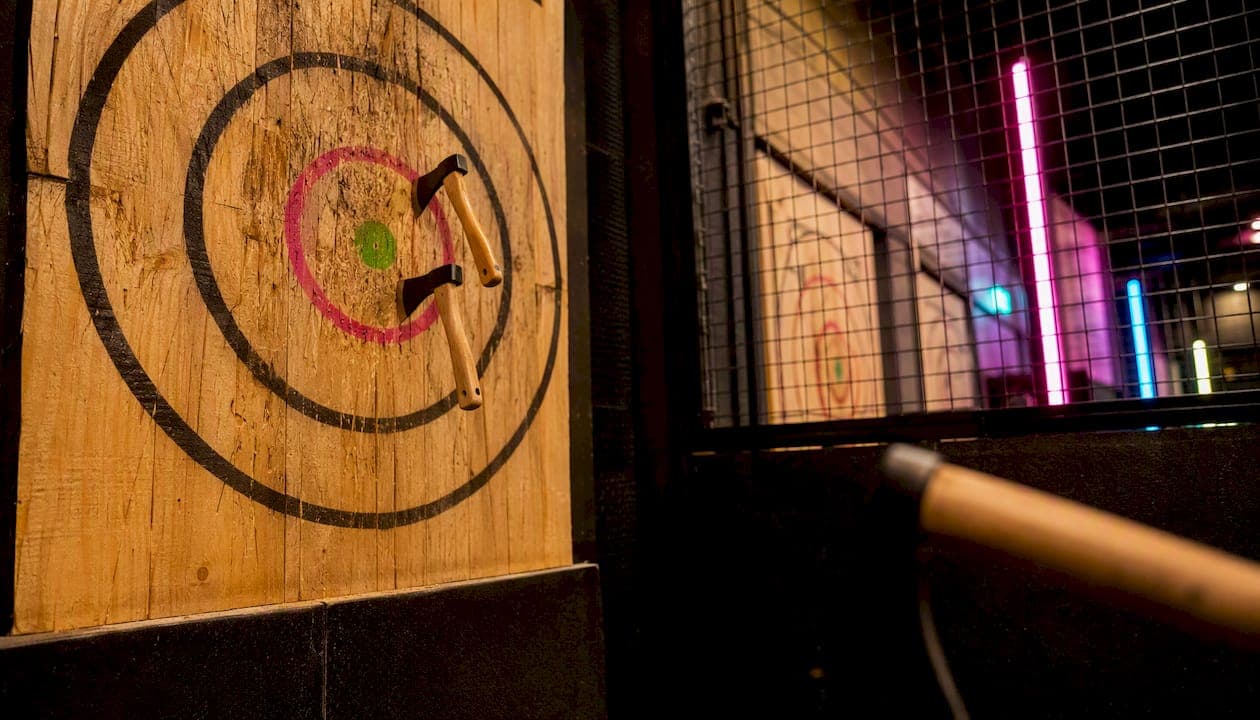
Axe throwing league nights are recurring, venue-run competitive sessions where you throw scored games across a structured season, with your results feeding into standings and, at sanctioned venues, qualifying points. Think of it as your posse saddling up every week for a proper showdown, not just a one-off casual fling with a hatchet. Many UK venues run seasons under World Axe Throwing League (WATL) or International Axe Throwing Federation (IATF) rules, so your scores can count towards official rankings. Ready to ride? Check local venue schedules or head straight to Lvls Newcastle's axe throwing page to see what seasons are coming up.
- League nights are scored, structured sessions within a season, not casual open play
- Sanctioned venues follow WATL or IATF rules so scores count officially
- Seasons typically run across multiple weeks with playoffs at the end
- Lvls Newcastle offers dedicated axe lanes and league scheduling in Newcastle
Key takeaways
Axe throwing league nights are structured, scored weekly sessions within a season, and sanctioning by WATL or IATF is what turns your local results into qualifying points for regional and world competition.
| Point | Details |
|---|---|
| League structure | Scored weekly sessions across a season, feeding into standings and potential qualifying points. |
| WATL/IATF minimums | Hatchet leagues need at least 6 throwers; each player must complete 12 games to count in standings. |
| Make-up policy | Make-up games must be completed during designated league nights, not at separate open sessions. |
| Competitive pathway | Sanctioned league scores and Circuit Points are the primary route to WATL regional and world championships. |
| Lvls Newcastle | Offers dedicated axe lanes, league scheduling, Lvls Society membership, and group packages in Newcastle. |
Table of Contents
- What are axe throwing league nights, exactly?
- How do axe throwing league nights actually run?
- How long does a season run, and what are the minimums?
- Who can join an axe throwing league?
- How do you sign up, and what does it cost?
- Safety rules and equipment: what WATL and IATF set out
- Why join a league? The competitive pathway explained
- What to expect on your first league night
- Why Lvls Newcastle takes league nights seriously
- Book your league night at Lvls Newcastle
What are axe throwing league nights, exactly?
A league is a season-based competitive structure, a world away from booking a lane for a birthday warm-up. Where casual sessions are one-and-done, a league commits you to a set number of nights across a season, with every game contributing to a running standings table.
Local venues typically run leagues under their own staff or a dedicated league runner, usually following WATL or IATF frameworks. That matters because it standardises everything from lane width to how the Killshot ring scores. Common formats include:
- WATL-style seasons typically run across multiple weeks with weekly match nights and end-of-season playoffs
- Marathon leagues, where a full season is condensed into a single day
- Recreational-only leagues with no sanctioning, purely for fun and bragging rights
The sanctioned route is worth understanding if you have any competitive ambitions. WATL sanctions seasons and maintains a global leaderboard, meaning your league scores can contribute to Circuit Points and open the door to regional and world championships. That pathway starts on a regular Tuesday or Thursday night at your local venue.
How do axe throwing league nights actually run?
Picture high noon, but indoors and with a lot more safety briefings. A typical league night follows a clear run-sheet so nobody is standing around wondering what happens next.
Arrival and warm-up: You check in, confirm your matchups for the night, and get a short supervised warm-up period on your assigned lane. New players get a safety briefing before a single axe leaves their hand.
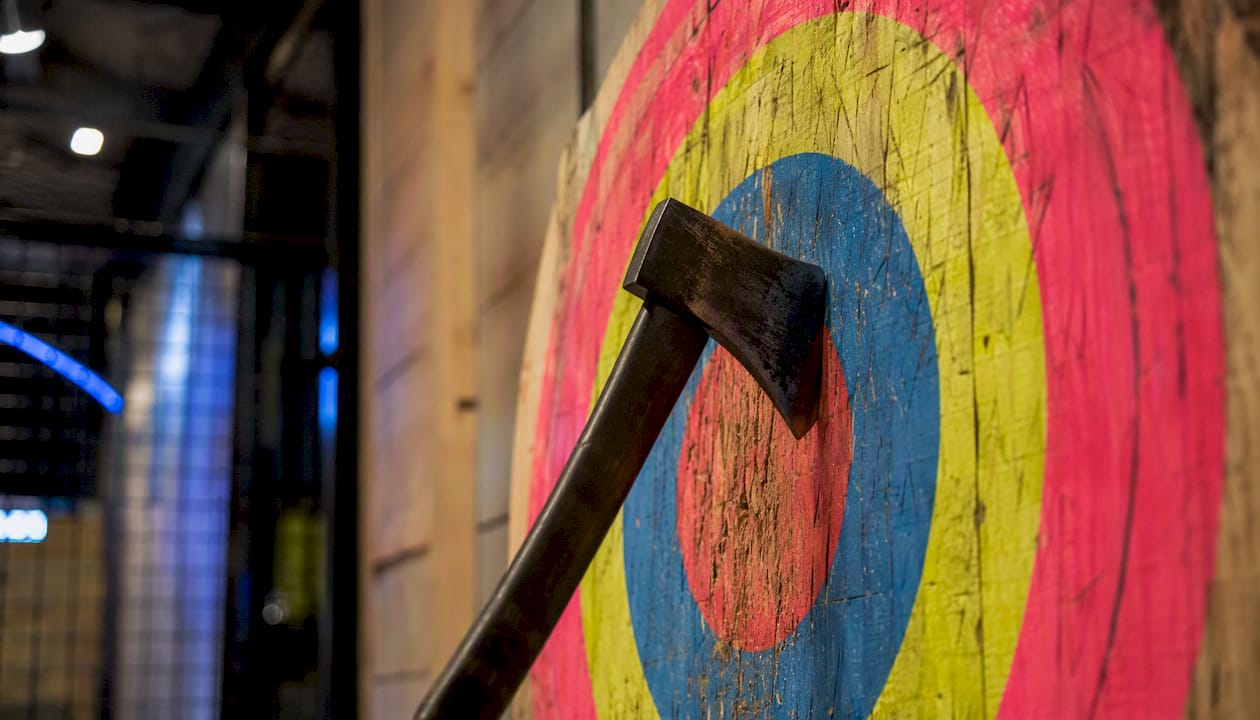
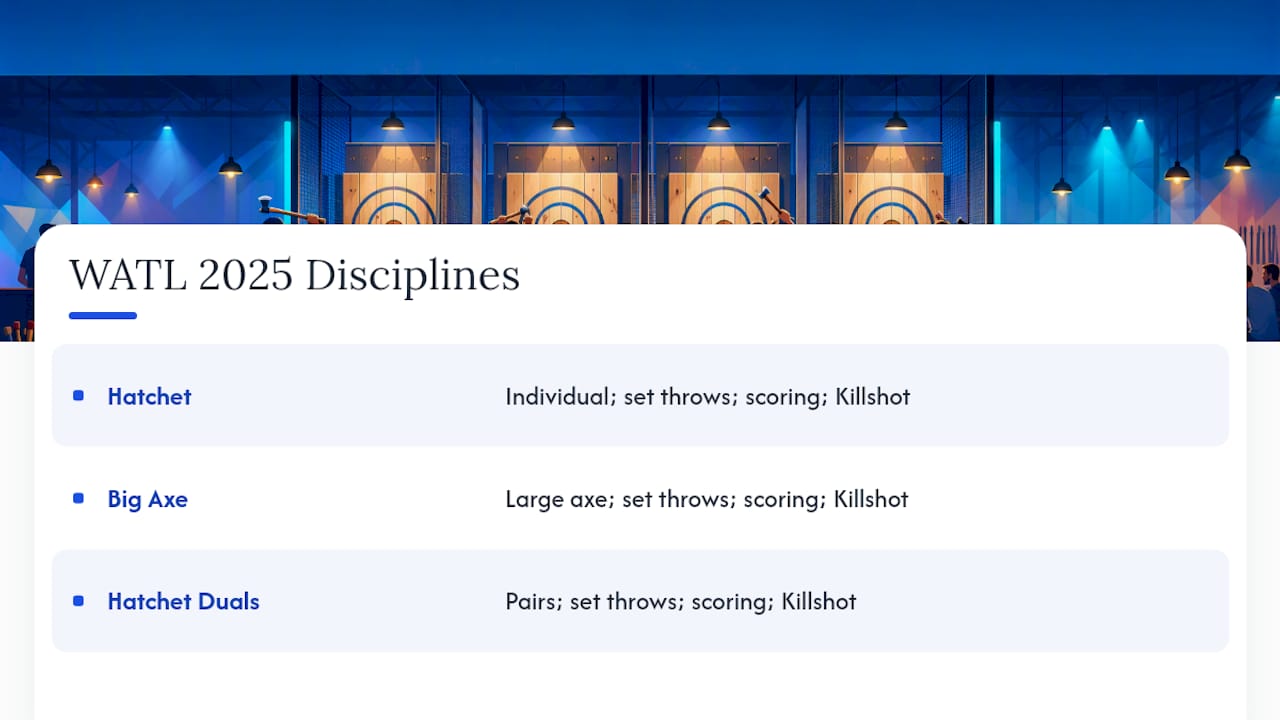
Match structure: Under WATL's 2025 gameplay rules, leagues cover three primary disciplines: Hatchet (the standard), Big Axe, and Hatchet Duals (pairs). Each game consists of a set number of throws, with scoring zones on the target worth different point values. The Killshot, a small ring at the outer edge of the target, is a high-risk, high-reward throw that can flip a game in one shot.
Standings and matchups: Opponents are paired based on current standings or a rotation schedule set by the venue. Your results from each night feed directly into the season leaderboard. Venues handle walk-ins and manual matchups at their discretion, though WATL's operational guidance notes limits on single-thrower manual games to keep things fair.
Pro Tip: Arrive at least 15 minutes before your first scheduled match. Lane assignments and matchup sheets go up early, and a rushed warm-up is the fastest way to throw wild on night one.
How long does a season run, and what are the minimums?
Seasons are not open-ended. Most WATL-style seasons run across eight weeks, with specific completion deadlines that determine whether your scores are official. Under the 2024 WATL gameplay rules, a late-season week must be completed by the season's end date for scores to count, which means missing a run of nights can cost you your standing.
The minimums for a sanctioned season are specific:
- Standard Hatchet: minimum 6 unique throwers per discipline
- Big Axe: minimum 4 unique throwers
- Individual throwers must complete at least 12 games across the season to count in the standings
Make-up games must be completed during that league's designated nights, not at a separate open session. Venues set their own absence policies within those rules, so check with your venue before you miss a night.
Marathon leagues compress a full season into a single day, which suits groups who cannot commit to a weekly schedule. Venues set their own limits on how many marathon events they run per season window.
Season note: A thrower who misses too many nights may not reach the 12-game minimum, which means their scores are excluded from the official standings even if they attended most weeks.
Who can join an axe throwing league?
Most leagues are open to adults of varying skill levels, from complete newcomers to seasoned gunslingers who have been throwing for years. You do not need to arrive as a sharpshooter. The IATF rules cover variations by competitor composition, including individual, pair, and team formats, so there is usually a structure that fits your group.
- Beginners and recreational throwers can enter novice or recreational divisions where the pressure is social rather than cutthroat
- Intermediate and pro divisions exist for those chasing rankings and qualifying points
- Women-only and themed nights are offered by some venues as a lower-pressure entry point
- Age limits vary by venue; most require participants to be 18 or over, though some venues allow accompanied younger throwers at their discretion
- Alcohol policies differ too: many venues permit drinking during casual sessions but restrict it during sanctioned league nights to keep things safe and official
Check your local venue's specific rules before you book, particularly around age and alcohol, since these are set at venue level rather than by WATL or IATF centrally.
How do you sign up, and what does it cost?
Joining a league is straightforward once you know the steps. Here is the typical process at most UK venues:
- Find a venue listing with an active league season, either through the venue's website or a WATL/IATF venue finder
- Reserve your season spot by paying a registration fee or per-season charge, depending on how the venue structures it
- Complete a waiver and safety briefing before your first night, which is non-negotiable at any reputable venue
- Turn up on league night with your registration confirmed and your game face on
Fee structures vary. Some venues charge a single seasonal registration fee covering all your league nights. Others charge per night, which suits those who want flexibility. Membership passes, like the Lvls Society, can offer discounts on repeat bookings and league nights for regular players.
What to bring:
- Closed-toe footwear is standard at most venues; trainers are fine
- Comfortable clothing that allows a full throwing motion
- Photo ID if the venue serves alcohol or has an age-verification policy
- No specialist kit required at most venues, which supply axes and targets
Late joiners can sometimes transfer into a season mid-way, though they may need to make up games to hit the 12-game minimum. Ask the venue directly about transfer policies.
Safety rules and equipment: what WATL and IATF set out
Safety at league nights is not optional, and the governing bodies make that clear. The WATL official rules standardise lane dimensions, target specifications, and scoring protocols across all sanctioned venues, which means the setup you walk into at a WATL-affiliated venue is consistent and tested.
Key safety elements you will encounter:
- Lane spacing: Defined minimum distances between lanes and spectator zones to prevent stray throws causing injury
- Mandatory safety briefing: Every participant, regardless of experience, gets a briefing before throwing
- Safe carrying and handing: Axes are carried blade-down and handed handle-first; no exceptions
- Staff supervision: A trained league runner or safety officer is present throughout
On equipment, most venues provide hatchets and big axes that meet WATL or IATF specifications. You can bring your own axe at some venues, but it must pass an inspection before use. The IATF rules also cover knife-throwing variations and team formats, giving venues flexibility to run multiple disciplines under one roof.
Alcohol during sanctioned play: Most venues that run WATL-sanctioned leagues restrict alcohol consumption during active league matches. Social drinking may be permitted before or after, but throwing under the influence is a disqualification offence at sanctioned events.
Why join a league? The competitive pathway explained
The social pull of league nights is real: you build a regular crew, develop a genuine skill, and have a structured reason to show up every week. But the competitive pathway is what separates league play from a casual session.
Benefits of joining:
- Regular, measurable practice with scored games tracking your improvement over weeks
- Community and rivalry with the same group of throwers across a full season
- Season awards and prizes at most venues for top finishers
- Sanctioned scores that contribute to WATL Circuit Points if your venue runs an official season
That last point is the one that matters if you have ambitions beyond your local venue. WATL's competition pathway uses sanctioned league participation and Circuit Points as the primary route to qualifying for regional and world championships. Consistent attendance across a full season builds the qualifying throws you need to be considered for higher-level events. Missing weeks does not just hurt your local standing; it can knock you off the qualifying leaderboard entirely.
What to expect on your first league night
Your first night will feel fast. Here is how to ride it without getting thrown.
- Arrive early: 15–20 minutes before the session starts gives you time to check in, sign your waiver, and read the matchup sheet without rushing
- Warm-up throws: You will get a supervised warm-up period; use every throw deliberately rather than just lobbing axes to loosen up
- Scoring flow: Scores are recorded after each game, either by a league runner or via a scoring app; ask how your venue tracks results before play starts
- Watch and learn: Between your own matches, watch experienced throwers in adjacent lanes. Technique differences are obvious up close in a way no video tutorial replicates
- Lane etiquette: Step back from the throwing line when it is not your turn, keep noise down during active throws, and be ready to swap lanes if the schedule requires it
Pro Tip: Do not obsess over the Killshot on your first night. Land consistent centre-ring throws and let your score build steadily. Chasing the Killshot too early is how beginners blow a winnable game.
Why Lvls Newcastle takes league nights seriously
At Lvls Newcastle, league nights are not an afterthought bolted onto a casual booking calendar. The venue runs dedicated axe throwing lanes, both interactive and classic, with a setup built for structured competitive play as much as group fun. The team brings genuine league runner experience, which means your first night is guided rather than guesswork.
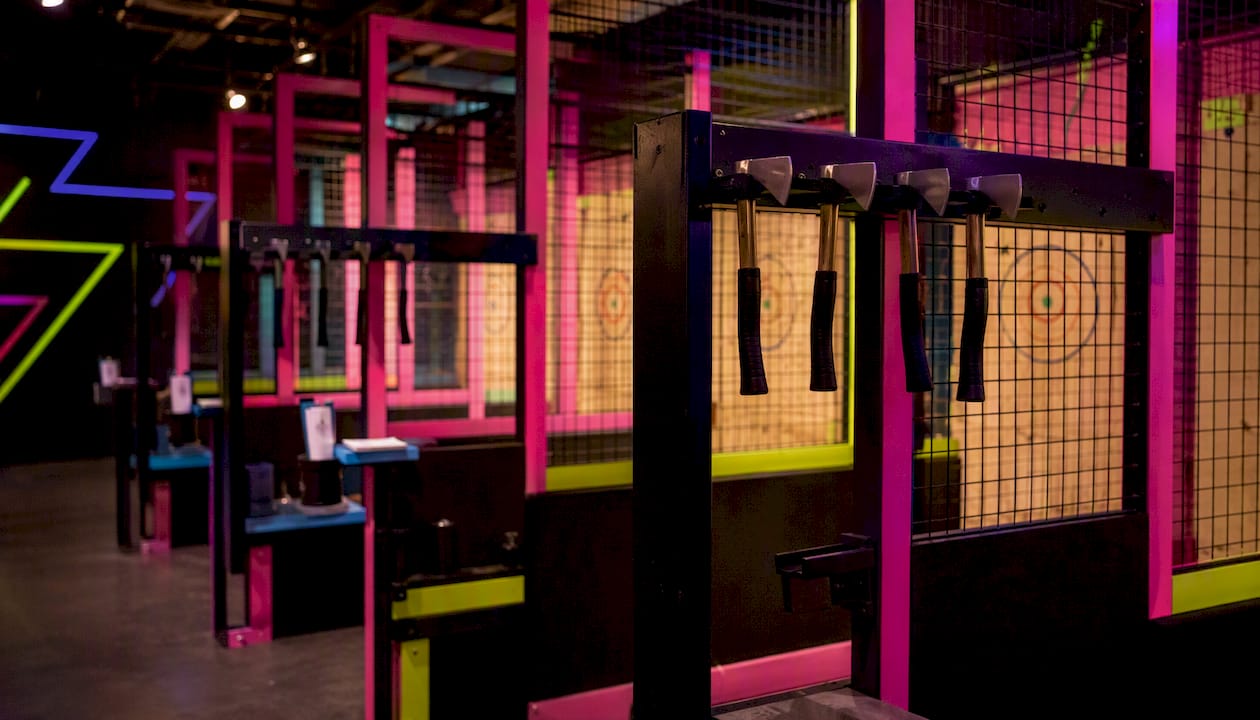
The Lvls Society membership gives regular league players access to repeat-visit benefits, making it worth considering if you plan to commit to a full season. Group packages are available for posses who want to book a lane block or combine league nights with other activities under the same roof, from escape rooms to interactive darts. With a perfect Google rating and a venue designed around variety and quality, Lvls Newcastle gives league players a home worth coming back to week after week.
Book your league night at Lvls Newcastle
Lvls Newcastle is the sharpest choice for competitive axe throwing in Newcastle, with dedicated lanes, flexible scheduling, and a venue that knows how to run a proper season night.
Head to the Lvls Newcastle axe throwing page to check current league season dates, choose your spot, and get your waiver sorted before night one. Group bookings and corporate league nights can be arranged through the venue directly, with customisable packages covering everything from lane hire to food and drinks. Membership through the Lvls Society brings added perks for those committing to a full season. Payment, waivers, and arrival guidance are all confirmed at booking. Your posse is not going to assemble itself, so ride over and claim your lane.