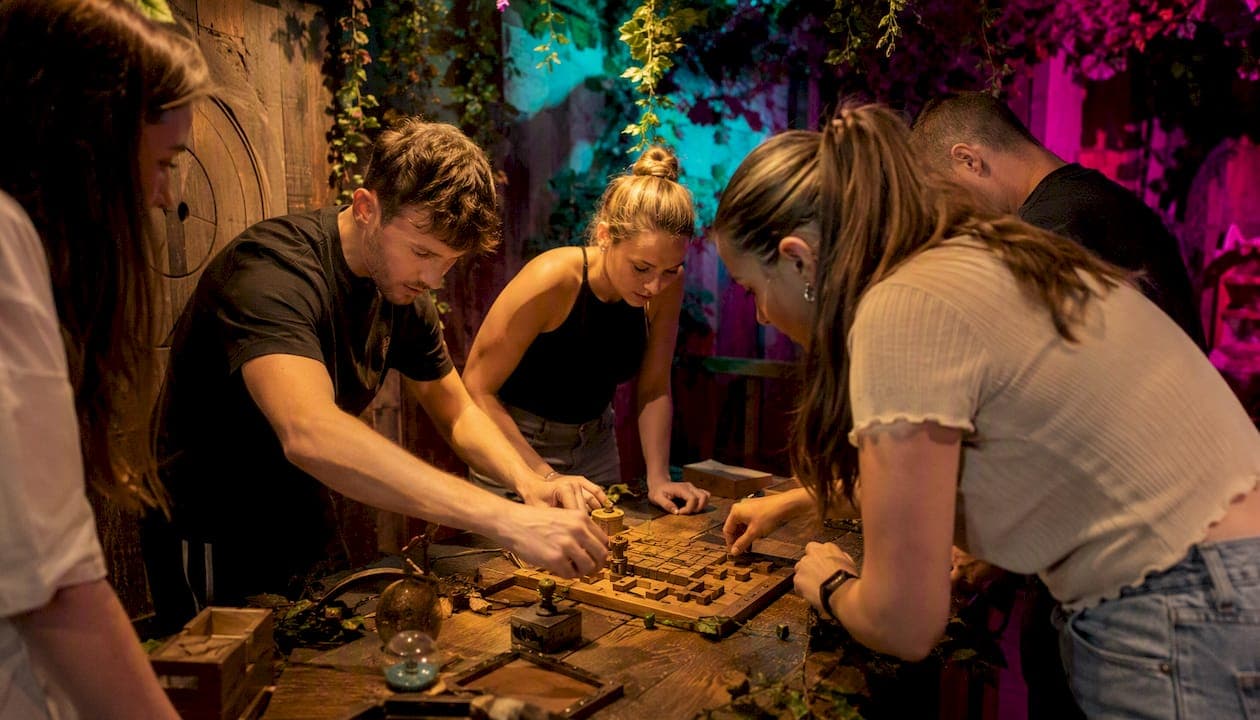
The sweet spot for escape room group size is 4–6 players. That single number is what operator experience consistently backs as the balance point between sharp communication and enough hands to split puzzles. Book within that range and your posse will stay busy, stay competitive, and actually stand a chance of cracking the case before the clock runs out.
Quick facts before you ride into the booking page:
- Typical operator range: 2–8 players per room, with most rooms physically designed for 4–6.
- Minimum players: many venues set a floor of 2–3 to cover session costs; going solo is rarely an option.
- Large groups: if your party is larger than around eight players, consider booking two simultaneous rooms or ask about a private-hire package rather than cramming everyone in one room.
Key takeaways
Book 4–6 players per room for the best escape room experience; larger groups should split into simultaneous rooms or choose a private-hire package.
| Point | Details |
|---|---|
| Sweet spot group size | 4–6 players balances communication, task-splitting, and puzzle engagement. |
| Typical operator range | Most UK rooms accept 2–8 players; check the minimum before booking to avoid phantom-player charges. |
| Room design matters | Ask whether the room is linear or non-linear; parallel puzzle threads support larger groups within the session. |
| Large group fix | Groups of 8+ should book two simultaneous rooms or a private-hire package rather than cramming one room. |
| Lvls Newcastle option | Themed rooms with private booking, multi-activity packages, and group-friendly pricing for parties of all sizes. |
Table of Contents
- 1. What operators normally allow, and why
- 2. How different group sizes actually feel in play
- 3. Why room design changes the ideal team size
- 4. How to choose the right group size for your booking
- 5. Practical options when your party is too big for one room
- 6. How Lvls Newcastle handles capacities and large bookings
- The number everyone argues about is usually the wrong question
- Lvls Newcastle: group entertainment beyond the escape room
- Sources
1. What operators normally allow, and why
UK escape room operators typically list a booking range of 2–8 players per room. The minimum exists for pricing reasons: a room costs the same to run whether two or six people show up, so venues set a floor to cover their overheads. The maximum is set by two harder constraints: the physical square footage of the room and fire-safety occupancy limits.
Beyond safety, there is a practical driver that most booking pages never spell out. Session length is commonly 60 minutes. In that window, a room with only one active puzzle thread at a time will bottleneck a large group almost immediately. Parallel puzzles, where multiple clues can be worked simultaneously, are what allow bigger teams to stay productive rather than standing around watching two people fiddle with a padlock.
Sixty minutes is the common session duration. Rooms with parallel puzzle threads allow larger groups to use that time efficiently, while linear rooms, where players tackle one puzzle at a time, slow down as more players join.
Three things to check on any operator page before you pay:
- Minimum players (to avoid phantom-player charges)
- Maximum players (the hard cap, not just a suggestion)
- Private-session option (so your group has the room to itself)
2. How different group sizes actually feel in play
Different headcounts produce very different adventures. Here is the honest breakdown, size by size.
| Group size | Experience feel | Best for | Operator note |
|---|---|---|---|
| 2 players | Intense, high difficulty | Date night, experienced puzzlers | Minimum pricing may apply; expect more hints needed |
| 3 players | Tight but manageable | Close friends, moderate challenge | Parallel puzzles become stretched; communication is key |
| 4 players | Balanced, recommended | Mixed groups, first-timers | Widely cited as the ideal team size |
| 5–6 players | Fast-paced, role-splitting | Birthdays, team-building | Most rooms calibrated for this range |
| 7+ players | Crowded, idle risk | Large parties | Split into two rooms or book a private package |
Riding solo as a pair
An escape room for two is certainly possible, though it tends to be more challenging. Smaller teams often rely on more hints and take longer to solve puzzles than groups of around four players. Some venues charge a minimum player fee, so be aware of potential phantom-player charges.
Three's a posse, just about
Three players sit in an interesting middle ground. You can split some tasks, but the moment a room throws two simultaneous puzzle threads at you, one person ends up idle. Socially it is tight and fun; operationally it can feel stretched in a room designed for more.
Four players: the sheriff's favourite
A four-person team hits the sweet spot most operators quietly design for. There are enough brains to split tasks, enough voices to catch each other's blind spots, and not so many people that communication collapses into shouting across the room. If your group is mixed in experience, four is the number to aim for.
Five to six: the full posse
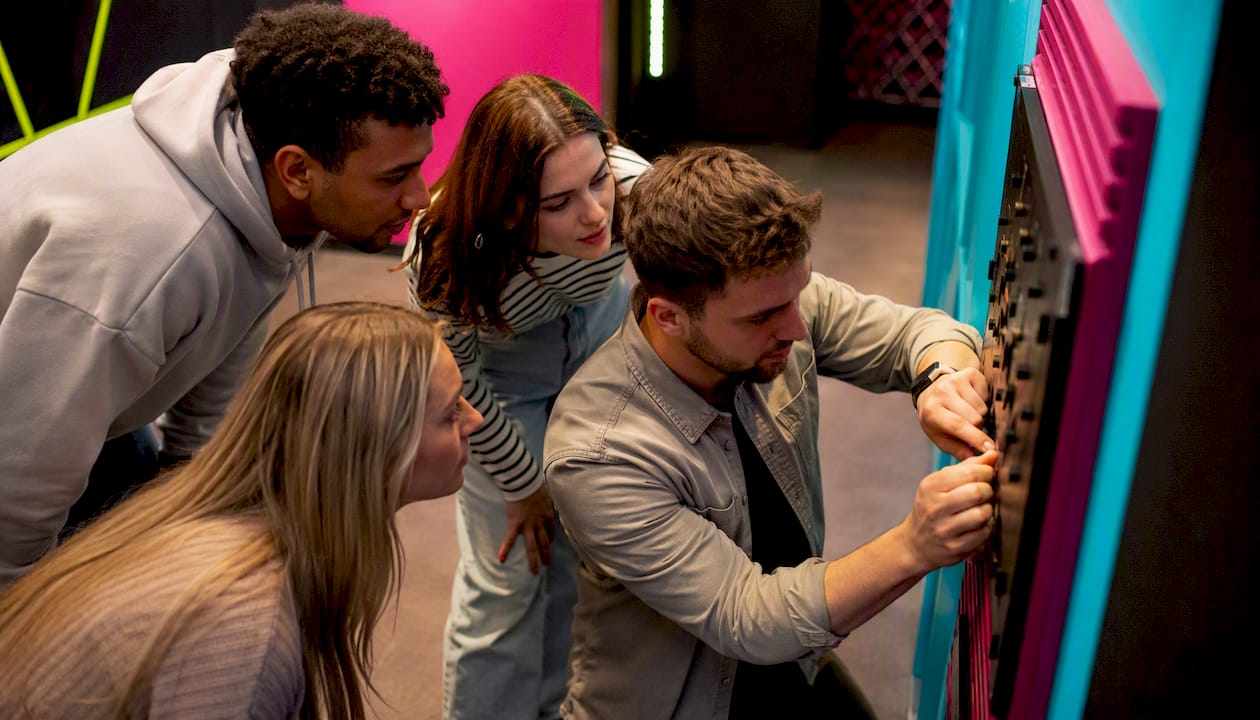
Rooms with parallel puzzle threads are built for groups of five to seven. Players can split naturally into sub-teams, everyone stays active, and the clock pressure feels genuinely shared rather than resting on two people's shoulders. Birthday parties and team-building sessions tend to shine at this size.
Seven or more: when the room gets crowded
Groups of seven or eight and above often hit a ceiling in single-room experiences. Physical space runs short, some players end up watching rather than doing, and the group's communication overhead grows faster than its puzzle-solving speed. The fix is not to squeeze in anyway; it is to book two rooms simultaneously or ask the venue about a multi-room package.
3. Why room design changes the ideal team size
Room design is a stronger determinant of ideal group size than the advertised maximum capacity alone, and understanding the layout before you book can save your posse from a frustrating hour.
Linear rooms present one puzzle at a time. Everyone must solve it together before the next clue unlocks. That structure concentrates attention and works beautifully for two to four players; add more and the room becomes a spectator sport.
Non-linear rooms scatter multiple active puzzles across the space simultaneously. Players can split into sub-teams and work in parallel, which keeps everyone engaged and suits groups of five or six comfortably.
Multi-room or branching layouts go further still, with separate physical spaces that different players can explore at the same time. These formats genuinely support larger teams without the crowding risk.
Pro Tip: Before you book, ask the operator one question: "Is this room linear or non-linear, and how many simultaneous puzzle threads are active at once?" The answer tells you more about the right group size than the maximum-player figure on the booking page.
4. How to choose the right group size for your booking
Run through this checklist before you confirm your headcount.
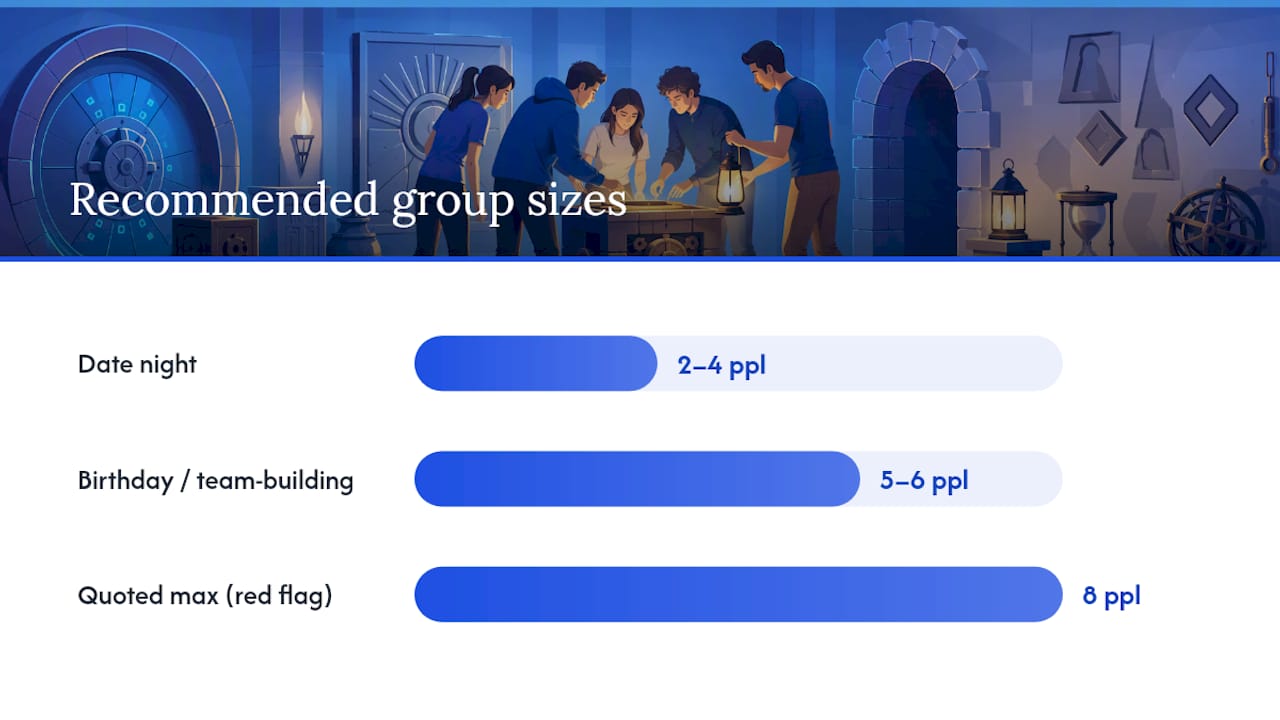
- What is the goal? A date night calls for two to four; a birthday bash or team-building session suits five to six.
- What is the group's experience level? First-timers benefit from a slightly larger group to share the cognitive load; veterans can go smaller and enjoy the extra challenge.
- Are children or mixed ages involved? Check age restrictions and whether the room's puzzles are accessible for younger players. The family-friendly guide for Newcastle covers age suitability and capacity considerations worth reading before booking.
- Is a private session available? A private booking means no strangers join your group, which matters for team-building and hen or stag parties.
- Does the room's design match your headcount? Cross-reference the layout type (linear vs non-linear) with your group size using the question above.
Watch for these red flags:
- A small single-room venue quoting a maximum of 8 for a space that looks like a large cupboard.
- Puzzles described as "one player at a time" in a room you plan to fill with six people.
- Age restrictions that exclude half your party.
Always check the room description for the designer's recommended player count, confirm whether the session is private, and verify the capacity before you pay.
5. Practical options when your party is too big for one room
A large group does not have to mean a compromised experience. Here are the options, each with a real trade-off.
- Two simultaneous rooms: split your party into two teams of four to six and book adjacent rooms at the same time. You get a competitive element (which team escapes first?) and everyone stays fully engaged. This is the cleanest solution for groups of 10–14.
- Staggered sessions: one team plays while the other waits, then they swap. Total time roughly doubles, and the social energy between sessions can dip. Works when the venue cannot offer two rooms at once.
- Private-hire packages: the venue reserves the space for your group, often with a combined briefing and debriefing in a shared area. Ideal for corporate events and large celebrations where the social frame around the game matters as much as the game itself.
- Combine with another activity: pair the escape room with axe throwing, darts, or a board game session at the same venue. Groups of 12 or more often find that rotating through two or three activities across an evening keeps energy high without anyone feeling idle.
Pro Tip: When booking two simultaneous rooms for a large party, ask the venue to synchronise the briefing so both teams start at exactly the same moment. A shared debrief at the end, where each team reveals how far they got, turns two separate experiences into one memorable competition.
For a deeper look at structuring large corporate groups, the team-building escape room guide covers how to split teams, set competitive stakes, and debrief effectively.
6. How Lvls Newcastle handles capacities and large bookings
Lvls Newcastle is a useful real-world example of how a well-run venue approaches group size. The venue offers multiple themed escape rooms with private-booking options, meaning your gang gets the room to yourselves rather than sharing with strangers. Each room lists its own minimum and maximum player count on the booking page, so you can match your headcount to the right experience before you commit.
For a party of 12, the practical approach at Lvls Newcastle looks like this:
- Book two escape rooms simultaneously, splitting into two teams of six.
- Follow the escape rooms with a session of axe throwing or interactive darts to keep the whole group together for the social finish.
- Ask the team about a group package, which can bundle activities and simplify the billing for a birthday or corporate event.
Lvls Newcastle holds a perfect Google rating and caters to everyone from families to corporate teams, with customisable packages for birthdays, stag and hen parties, and large group bookings. The venue's board game café, with over 80 games available, gives large groups a natural gathering point between activities.
The best escape rooms in Newcastle guide covers room themes and size suitability in more detail if you are still deciding which room fits your group.
The number everyone argues about is usually the wrong question
Most of the debate around escape room group size circles the same question: "How many can we fit?" That framing is backwards. The room's maximum capacity is a fire-safety figure, not a design recommendation. Operators set it to keep people safe, not to tell you the number at which the experience is actually good.
The question worth asking is: "How many puzzle threads run simultaneously in this room?" That single answer tells you more about the right headcount than any booking page maximum. A room with one active thread at a time will frustrate a group of six just as reliably as a non-linear room will leave a pair of players feeling like they are rattling around an empty space.
The other thing most guides underplay is pricing. Two players booking a room built for six will often pay a minimum charge equivalent to three or four players anyway. Going in as four costs the same or barely more, and the experience is measurably better. The economics and the fun point in the same direction.
Lvls Newcastle: group entertainment beyond the escape room
If your posse is ready to ride, Lvls Newcastle packs more into one venue than any single escape room can offer. The escape rooms at Lvls Newcastle come with private-booking options, themed challenges for all skill levels, and the flexibility to pair your session with axe throwing, interactive darts, or a round at the board game café. For groups of 10 or more, the venue's customisable packages handle the logistics so you can focus on the competition.
Whether you are planning a birthday, a corporate team-building day, or a stag or hen party, Lvls Newcastle's team can build a package around your group size and your goals. Check availability and book your escape room adventure directly on the site, or get in touch to talk through a bespoke group package.
Sources
- Escape Room Group Size Guide: How Many People Do You Need?
- 7 Tips for Choosing the Right Escape Room for Your Group
- How many people can play in an escape room?